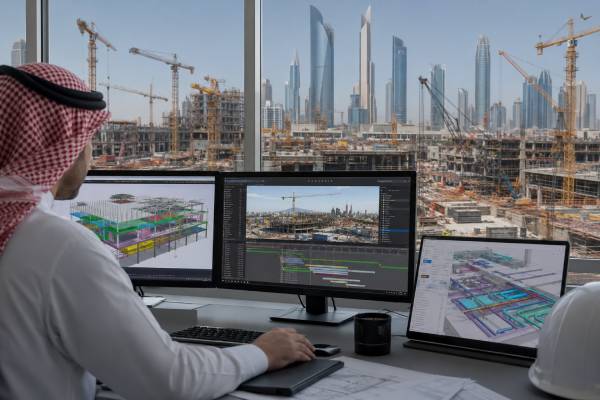
Mega construction projects in the Gulf region, whether it’s airports, metros, skyscrapers, or smart cities, they share a common challenge: cost overruns. Despite advanced engineering and large budgets, projects often exceed initial estimates due to design changes, coordination issues, procurement delays, and rework.
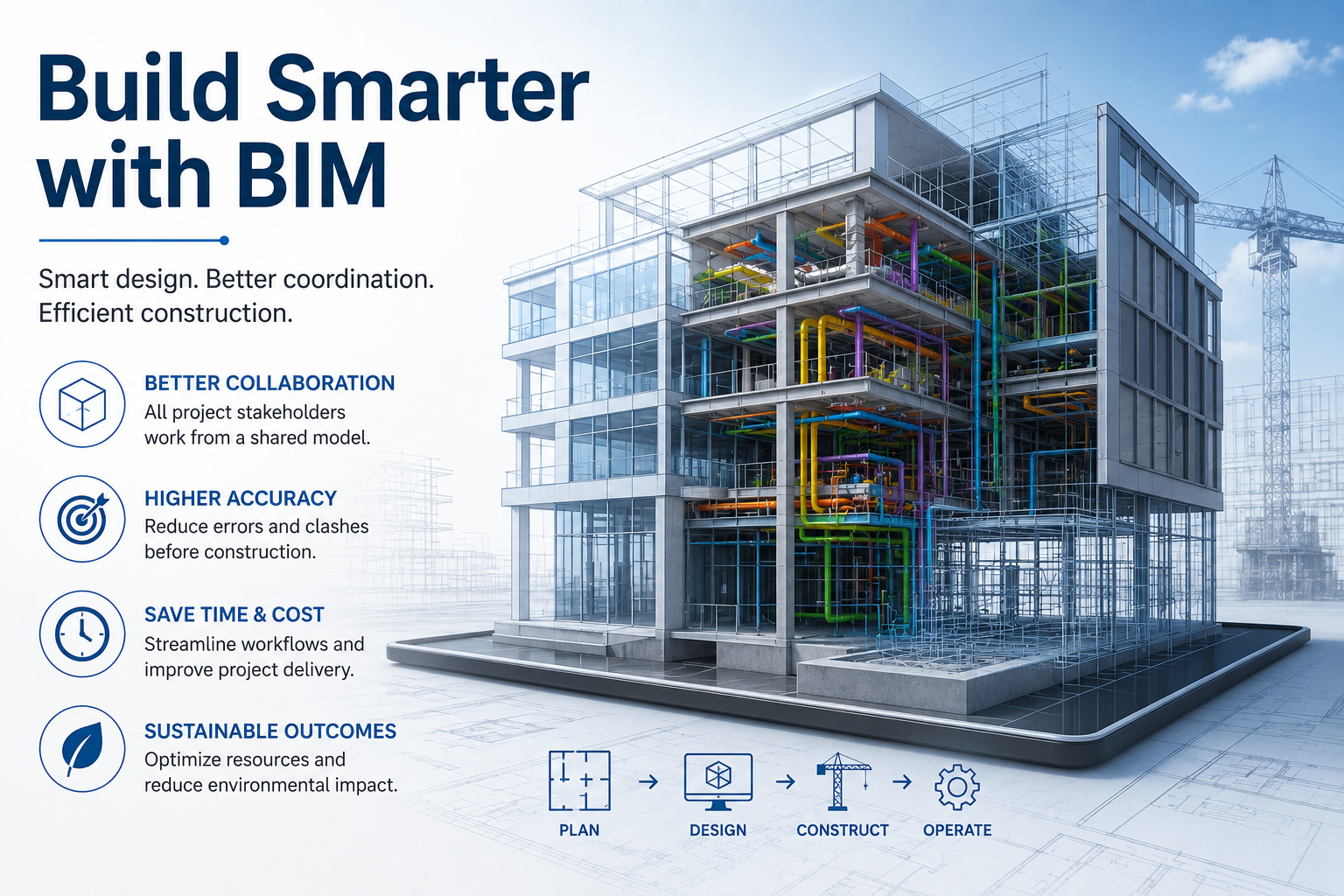
In recent years, Building Information Modelling (BIM) has become one of the most effective tools for controlling these overruns. Real value of BIM is not just creating 3D models, it lies in how it transforms coordination, planning and cost visibility in the entire project cycle.
This article breaks down how BIM is actively reducing cost overruns in Gulf mega projects through four key mechanisms: clash detection, 4D/5D scheduling, procurement coordination, and cost control.
Benefits of 3D CAD Modeling
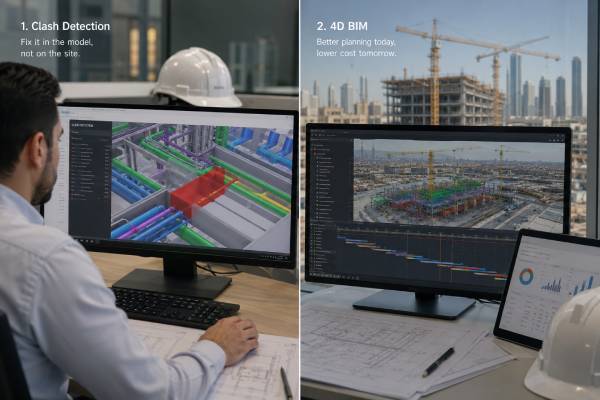
1. Clash Detection: Eliminating Expensive Rework Before It HappensCompared to 2D drawings 3D models show everything about a project. They help teams understand the project fully before any physical work starts.
These designs are turned into digital models using top CAD software.✅ AHVAC ducts intersecting structural beams
Site utilities colliding with foundations Traditionally, these issues are discovered on-site, leading to expensive modifications, delays, and material waste.
With BIM, clash detection happens digitally before construction begins.
How it keeps the cost overrun at bay:
- Finds the clashes right in the coordination stage
- Gives engineers the opportunity to deal with the clashes before it reaches the field
- Minimises the number of change orders during construction
- Limits the waste of material and labour rework
This includes walls, floors, roofs, doors, windows, ceilings and interior plans. The models look realistic. Help with design visualization.
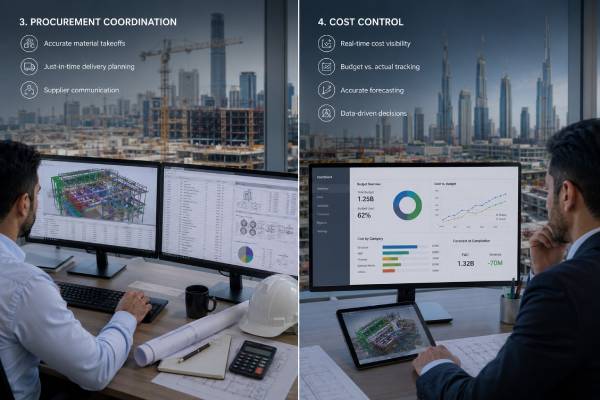
Another major source of cost overrun is procurement, especially large scale and international infrastructure projects that require global supply chain management.
BIM helps in procurement by accurate material pickups, Quantities coming from the model allow for more accurate procurement, less uncertain assumptions, Just in time delivery planning, BIM gives the ability to plan delivery of material based on the actual schedule of construction. This prevents materials from arriving early (storage cost) or late (delay cost), Supplier communication, BIM enables clear specifications and better communication to suppliers to minimise double and incorrect specification.
The most significant changes a BIM project manager could experience are not in current individual BIM branches (3D, 4D, 5D), but in data-driven project control.
BIM becomes a single source of truth, where:
- Designers instantly know cost impact
- Contractors monitor progress vs. budget
- Clients see financial exposure in real time
- Avoiding budget drift
- Transparent change management
- Cost control benefits:
In Gulf mega projects with dozens of consultants, contractors and subcontractors working concurrently, clash detection can reduce a huge portion of the avoidable cost. The change is subtle yet effective: Fix it, in the model, not on the site.
Time delays are a key driver of cost escalation in large scale construction. 4D BIM which links the 3D model with the schedule in time, provides a visual representation of construction as it progresses.
Instead of reading static Gantt charts, the project team can view the sequence approaching face on.
- Benefits include:
- Identifies clashes in schedule, before construction starts
- Improves sequence of trades on site
- Identify resource constraints (including labour, cranes, access zones)
- Enables better buffering of activities that can occur in parallel
On mega projects in Dubai and Riyadh, where there are several contractors with tight locations and tight timeframes, 4D BIM can minimise:
- Site congestion
- Idle labour
- Equipment conflicts
- Unexpected downtime
- Cost overrun is a natural consequence of time delay, however.
- Accurate forecasting
- Accountability to stakeholders
With BIM, teams don’t have to wait until the end of a project to discover a cost overrun.

Conclusion
BIM is not only an option for cost control, The cost overruns in mega projects is because of the compounded efficiencies from designing, scheduling, procurement and communication. Re-works can be prevented by clash detection. 4D BIM reduces costly delays, 5D BIM assists with financial accuracy, Procurement integration helps reduce waste and Data exploitation increases cost control. Construction market in the Gulf region has changed from a design tool to a core project and financial management system with BIM. For Mega companies BIM is no longer to improve only cost control, it's about the speed of BIM integration in project at every stage.
Leave a Reply
Your email address will not be published.